Mindfulness and photography: what I learned writing for Digital Photo Mentor
Mindfulness can make your photos better, but not by improving your technique. It trains the step that comes before technique: noticing what is worth photographing. I found this out by accident, after months away from my camera. In November 2025, I wrote Can Mindfulness Make Your Photos Better? for Digital Photo Mentor, a photography education website. This page is a short recap of what I learned about mindfulness and photography, and of why it still shapes the photos I take for businesses.
What changed after almost ten months without a camera
For almost ten months in 2023, I barely touched my camera. It wasn’t a creative break. I was going through a difficult time in my personal life, and my energy was needed elsewhere.
What I did in those months was practice mindfulness. Not to become a better photographer: I wasn’t thinking about photography at all. I did it to get through that period.
When I started taking photos again, something had changed. My technique was the same, and I hadn’t taken a course or bought new gear. But I was present in a way I had never been before. I noticed details I used to miss and stories I used to walk past, and it showed in the pictures.
So I asked myself: could a practice I had started for a completely different reason do more for my photography than any course? After months of thinking about it, my answer is yes, but not for the reasons you might expect.
Seeing comes before composition
Photography is usually taught from the technical side first: exposure, aperture, ISO, and composition. Somewhere near the end comes the advice to tell a story. How you find that story is the part nobody really teaches.
Mindfulness reversed that order for me. It taught me nothing about exposure or composition. It trained something that comes earlier: realizing that the scene in front of me holds a story worth telling.
If you can’t see the story, technique only gives you correct photos with nothing to say. If you can see it but your technique is still weak, at least you know what you need to learn, and that is a strong reason to learn it.
Photographing without a plan
The clearest change was this: my best photos come when I stop looking for something specific.
In the woods, I used to hunt for a subject, with a plan and a set of expectations. These days I go in without one, notice what is really there, and ask myself how it makes me feel.
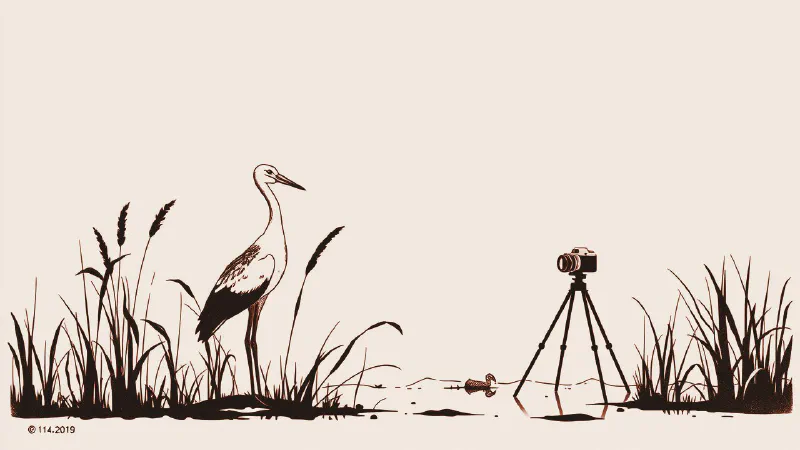
Most of the photos in the article are of mushrooms, and they suit the idea well. They don’t last long, and you can’t plan where they will grow. The only way to photograph them is to go into the woods and see what you find. I worked the same way at a stork release at the Padule di Fucecchio, a wetland nature reserve in Tuscany. I was there as a volunteer photographer for LIPU, the Italian League for Bird Protection, with no control over the scene, only over my attention.
When you’re present and don’t force it, you find stories you could never have planned.
Writing it down taught me even more
Putting all this into words for other photographers forced me to clarify ideas I had only felt. Two examples: how much a photo depends on understanding your own emotions, and the difference between breaking a composition rule by accident and breaking it on purpose. By explaining them to others, I understood them better myself. Teaching makes you check what you thought you already knew.
What this means when I photograph your business
“Seeing before composing” may sound like advice for art photography only. It isn’t.
When I photograph a hotel, a B&B, or a restaurant, the difference between a photo that brings bookings and one people scroll past is rarely technical. It comes down to what I choose to see: the detail that tells guests what a morning there is like, the light that gives a room its mood, the moment that lets someone picture themselves at the table. The camera settings carry out that choice, but the eye makes it. It’s also why professional photos change what guests think a stay is worth.
So when I plan a photo shoot for your business, I don’t start with the camera settings. I start with what you want your guests to notice first.
Want photos that show what it's like to be there?
Read the full article
The full article on Digital Photo Mentor goes further, with three ways to understand mindfulness, a few practical exercises for photographers, and more of the mushroom and landscape photos. It isn’t a technical piece. It’s about photographing with attention and honesty, and you may recognize something of yourself in it.
You can read more about me and my background on my About page.