Drone photos and video for hotels and villas: when they pay
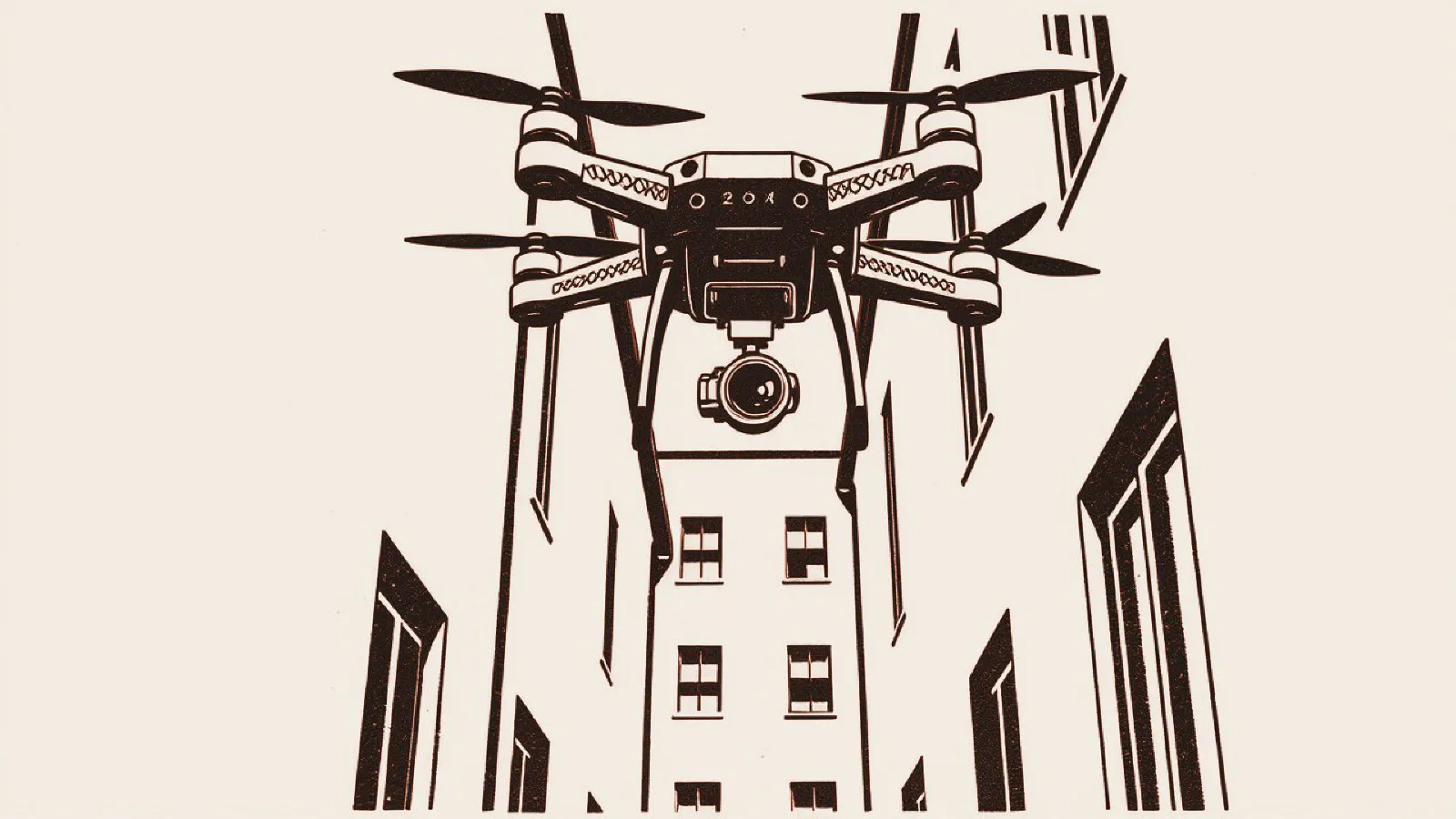
Drone photography for hotels pays off when what guests are buying can’t be seen from the ground: the vineyards and hills around an agriturismo (farm stay), the size of a villa’s grounds, a pool boxed in between walls. If the best part of your property is indoors, as with a B&B in a historic town center, a drone adds little, and the money is better spent on the rooms.
I’m a photographer based in Tuscany, and I don’t suggest a drone to every client. This is how I decide, starting with a real case.
A real case: the pool that wouldn’t fit in a photo
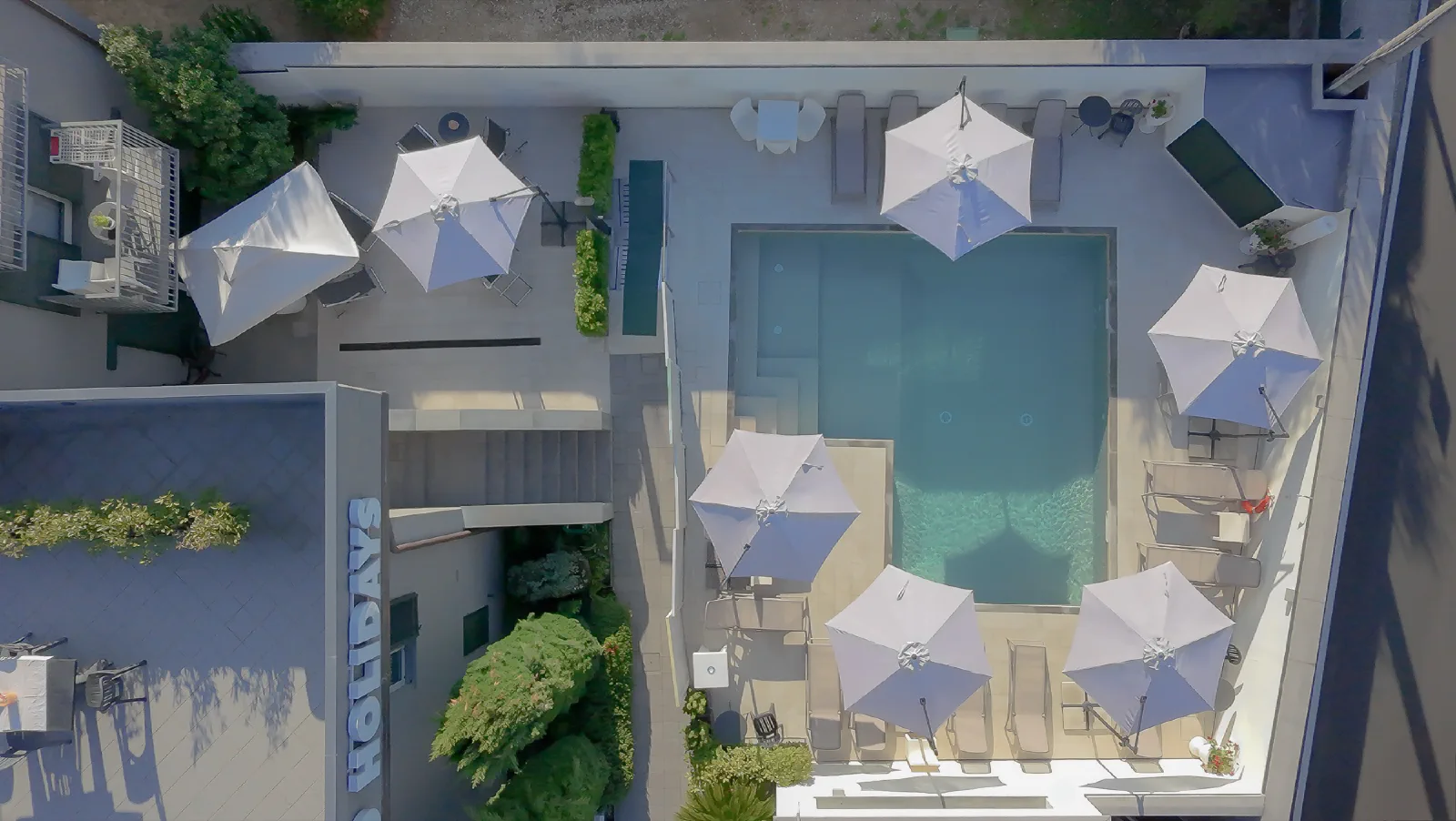
A vacation rental property in Lucca had a well-kept pool, with clean water, a tidy sun deck, comfortable lounge chairs, and white umbrellas. The problem was where it sat. The pool was squeezed into a narrow space between the boundary wall and the building, with nowhere to step back.
From the ground, even the widest lens caught only pieces: a corner of the water, a row of lounge chairs, a strip of deck. The photos were technically correct, but they said nothing about how large or how well laid out the space was. And a pool that looks cramped makes the whole property look cheaper, because weak photos lower the price guests expect to pay. I go into this in the post on what professional photos are worth.
The fix was vertical. The drone went straight up above the pool, and from there everything made sense at once: the whole area, how the lounge chairs and umbrellas were arranged, how the pool sat against the building. One aerial photo did what ten ground-level shots couldn’t. It showed guests the space before they arrived, instead of leaving them to discover it on the first day.
Aerial photography for hotels: five cases where it pays
A drone earns its fee when it shows something that decides the booking and can’t be shown any other way. That comes down to five situations.
The setting is what guests pay for
For an agriturismo among vineyards, a B&B on a hill in Chianti, or a hotel by the sea, the landscape is a big part of what guests are buying, and from the ground you barely see it. Guests booking from abroad don’t know the area, so the aerial photo tells them where they will be: in the hills, among the vines, a short drive from a village.
The grounds are too big for one frame
Olive groves, woods, gardens, and paths spread over several hectares don’t fit in a ground-level photo. From above, one image shows how much space guests will have.
The space is closed in
Courtyards, terraces surrounded by buildings, pools between walls like the one in Lucca. Where a camera on the ground gets fragments, a drone gets the whole picture.
The building only makes sense from above
Frontal photos flatten a farmhouse built on several levels, a tower, or an old villa with wings and terraces. A higher viewpoint shows the shape of the building and how it sits in the landscape.
Privacy is what you sell
This is where drone photography for villas pays most. Guests who rent a whole villa or vacation home (a holiday let, in British English) are often paying for privacy. A photo from above shows the pool, the garden, and not a single neighbor in sight. That is hard to prove with words in a listing.
One good aerial photo can also be used everywhere, from your website and your Booking.com, Airbnb, and Vrbo galleries to social media and press material. In a list of properties all shot from the ground, it stands out.
Hotel drone video: when a clip beats a photo
A photo shows a place; a video shows how you move through it. Drone video is worth it when the approach or the sequence matters: the road through the cypresses up to the house, the camera rising over the pool until the valley appears, the path from the rooms to the vineyard.
Keep it short and mix it with ground footage. A few seconds from the air set the scene; then come the rooms, the breakfast table, the details. A video made only of aerial shots shows the setting and nothing of the stay.
Use the video on your website’s home page, on social media, and on your Google Business Profile, which takes clips of up to 30 seconds. Your Booking.com, Airbnb, and Vrbo listings are built around photos, so there the aerial photo does the work.
Have a space that doesn't work from the ground?
When you don’t need a drone
A drone doesn’t always add value, and saying so is part of the job. Skip it when:
- the best of your property is indoors, as with a B&B in a historic center;
- your outdoor spaces already photograph well from the ground;
- the surroundings add nothing, or work against you (a main road, an industrial area, a big parking lot);
- the budget is tight and the rooms still need good photos, because rooms come first;
- the rules make flying at your address difficult (see below).
Drone work is normally quoted as an extra on top of the ground shoot, so it should solve a real problem. Spending a photo budget well also means knowing what not to spend it on. What moves the price of a shoot, drone included, is in my guide to what a hotel photo shoot costs.
Drone rules in Italy: where a drone can fly
Italy applies the EU drone rules, and ENAC, the Italian civil aviation authority, adds a few national ones. The EU rules don’t separate hobby flights from paid work. What counts is the risk: the drone’s weight and class, where it flies, and how close it gets to people. A typical property shoot falls in the low-risk “open” category. That means a drone under 25 kg, always in the pilot’s sight, no higher than 120 m above the ground, and never over crowds.
Before any flight, the area has to be checked: the D-Flight map, the official Italian drone portal, shows the zones where flights are restricted or need permission, for example around airports. At hotels and villas, three more things need care:
- Guests. People who aren’t part of the shoot count as “uninvolved people,” and the rules restrict flying over or near them. Footage of anyone recognizable is also personal data under the GDPR. The simple answer is to fly when the pool and the garden are empty, for example early in the morning.
- Historic town centers. People everywhere, buildings close together, and in some towns a restricted zone around an airport or a sensitive site. Sometimes a flight needs an authorization; sometimes it isn’t possible.
- Parks and protected areas. Italy’s national parks don’t allow drone flights without the park’s authorization (in Tuscany, the Tuscan Archipelago, the Foreste Casentinesi, and the Tuscan-Emilian Apennines). Regional parks and nature reserves have their own rules.
What to ask before you book
You don’t need to learn the rules yourself. Ask these four questions. A professional answers them without hesitation.
- Have you checked my address on the D-Flight map, and is any permission needed?
- When will you fly, so that no guests are in the garden or by the pool?
- What happens if wind or rain stops the flight on the day of the shoot?
- Which aerial views do you suggest for my property, and which ones aren’t worth it?
Then put the aerial views you want into the brief for the whole shoot, so they’re planned with everything else. The hotel photography shot list shows what a good brief covers.
Can you fly your own drone?
Legally, a flight over your own hotel follows the same EU and ENAC rules as any other, and the limits above are only part of them: read them on ENAC’s website before you take off. The harder part is the photography. An aerial photo that sells depends on the light, the height, and the angle, and it has to match the rest of your gallery. Owning a drone and using it well are two different skills.
The drone is one part of the shoot
Plenty of photographers own a drone today, but the drone alone doesn’t solve anything. The work is spotting what a space can’t show from the ground and choosing the viewpoint that fixes it. In Lucca, the result was that guests could finally see the space.
Aerial photos work inside a full set: the rooms, the details, the breakfast, the feel of the place. The drone adds the view that was missing; it doesn’t replace the rest. If you’re looking for a drone photographer in Tuscany, aerial photos and video are part of my photography and video service, planned together with the rest of the shoot and flown only where the rules allow. For hotels, villas, and agriturismi, here is how I work as a hotel photographer in Tuscany.