Airbnb host fees and Booking.com commission: what you pay as a host in Italy
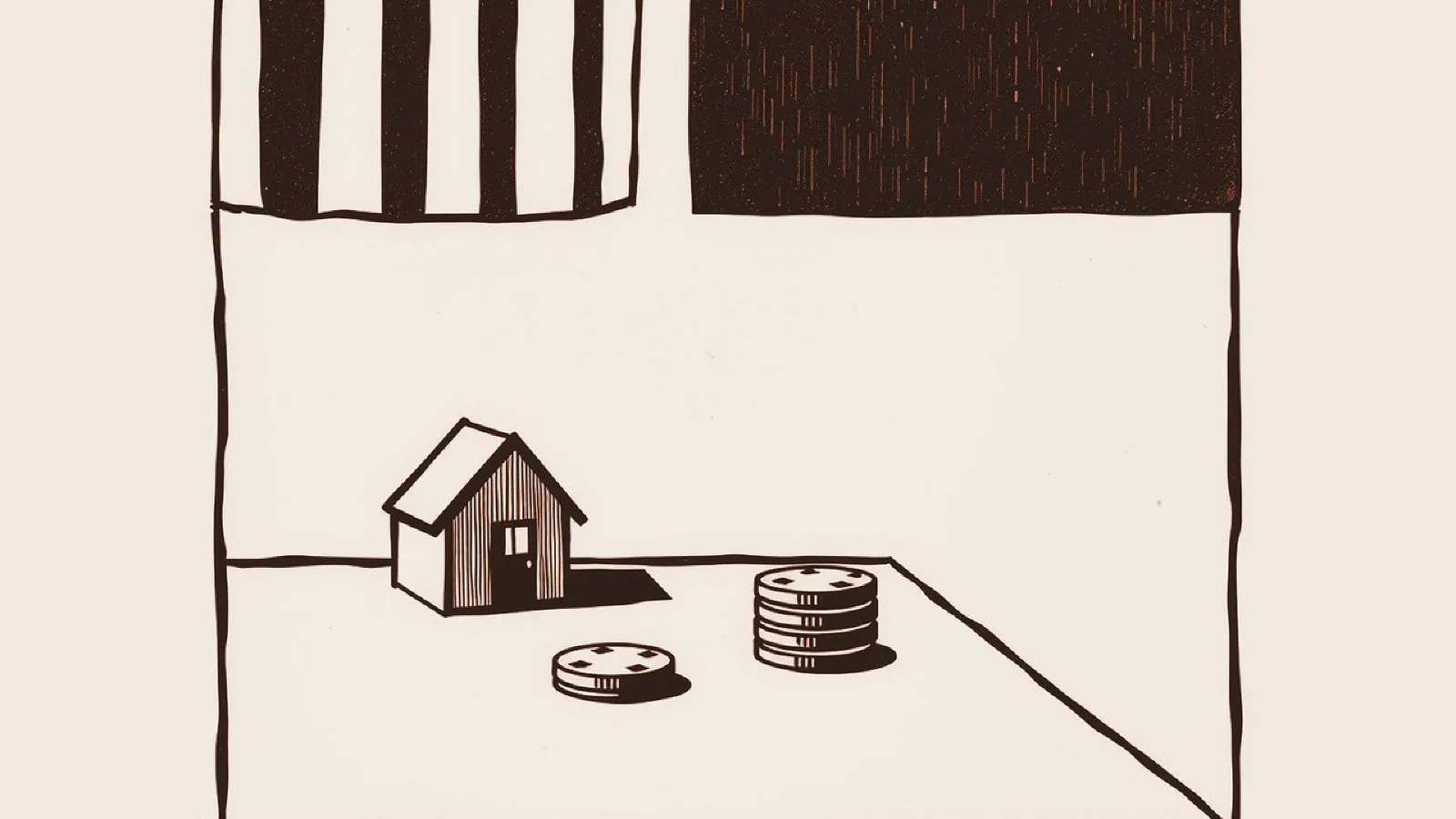
The notification arrives: five nights in August, €1,000. Then you open the payout details, and the amount that will reach your bank account is lower. It isn’t a mistake, it’s the fee. The problem is that few hosts know exactly how much the Airbnb commission or the Booking.com one takes, channel by channel, and so how much every guest who books directly with them is worth.
As of November 2026, Airbnb host fees and Booking.com commission work like this: Airbnb usually keeps 15.5% of the price of the stay, through a single fee it is moving all hosts to; Booking.com charges the rate in your contract, which according to Italy’s competition authority started from a 15% base and went up with its visibility programs. Below you’ll find how the two platforms calculate it, an example with round numbers, what that percentage buys you, and how to pay less of it without leaving the booking sites.
This guide is for people who host in Italy: owners of a vacation rental (a holiday let, as British owners say), a B&B, or an agriturismo (a farm stay).
Airbnb fees: how much does Airbnb take from hosts?
Most hosts pay 15.5% of each booking, taken from their payout. Airbnb’s charges for hosts follow one of two models, explained in its Help Center:
- Single fee (often called the host-only fee): the whole fee is taken from the host’s payout. Most hosts pay 15.5%, others usually between 14% and 16%. The guest sees the price you set, plus taxes.
- Split fee: the host usually pays 3%, and the guest adds a service fee of 14.1% to 16.5% of the booking subtotal. You keep more, but the guest sees a higher price.
If you use Airbnb in Italian, the two appear as “Costi singoli” (single fee) and “Costi condivisi” (split fee).
The split fee is going away. Airbnb says it is moving all hosts of homes to the single fee, and that once you’ve switched you can’t switch back. For hosts who live in the European Economic Area, Italy included, the date to adjust prices was October 13, 2026. If you connect to Airbnb through property management software, the single fee was already mandatory, and the same goes for hotels and other traditional hospitality listings.
One practical consequence: if you didn’t change your prices, you now earn less. The example is Airbnb’s own: leave a price of 100 as it was, and the host receives 84.50. The single fee applies to bookings made after the switch; bookings already confirmed keep the old terms.
One more thing. In Italy, Airbnb charges VAT on its service fees (IVA, the Italian value added tax), so what it keeps can be more than the percentage. How to record it, and whether having an Italian VAT number (partita IVA) changes anything, is a question for your accountant (commercialista).
How much commission does Booking.com take? Check your contract
Booking.com doesn’t publish one rate for everyone. Your commission is the one agreed when you signed up, and you’ll find it in your contract and in the statements in your extranet (the partner back office). You pay it once the stay is over, as Booking.com explains on its page about how it works.
For a sense of scale, there’s a public document. In 2024, when Italy’s competition authority (AGCM) opened an investigation into Booking.com (in Italian), it reported a base commission of 15%. According to Federalberghi, the Italian hotel association, in the most popular destinations it had become almost always 18%. Those figures are two years old and don’t apply to everyone: yours is the one in your contract.
If guests pay through Booking.com (Payments by Booking.com), your payouts can arrive net, with commission and payment fees already taken off, or gross, with those amounts to pay separately. It depends on how your property is set up, and you’ll see the amounts in your statements.
Booking.com’s visibility programs raise the rate
Booking.com says its default sort order also takes into account how much commission properties pay. Here are the main programs: the first three as AGCM described them in 2024, and Genius as Booking.com describes it on its partner pages:
| Program | What you get | What it costs you |
|---|---|---|
| Preferred Partner Program | a thumbs-up badge next to your name and more visibility | 3 percentage points more commission |
| Preferred Partner Plus | even more visibility, only for some Preferred Partners | commission at 23% |
| Visibility Booster and similar | a push up the rankings | a higher commission: AGCM mentions programs up to 30% |
| Genius | a possible preference in the results, shown to members of Booking.com’s loyalty program | a discount of 10% or more for Genius guests |
With Genius, the cost to count is the discount. Before you join any of these programs, do a simple calculation: how many extra bookings do you need to cover the extra commission, or the discount, you’ll give up on all the others?
An example with round numbers
Take a stay of €1,000 at the price you set, without the tourist tax. The percentages are the ones above; yours may be different.
| Channel | Rate | Kept by the platform | What you keep |
|---|---|---|---|
| Airbnb, single fee | 15.5% | €155 | €845 |
| Booking.com, base commission | 15% | €150 | €850 |
| Booking.com, popular destination | 18% | €180 | €820 |
| Booking.com with Preferred Partner Plus | 23% | €230 | €770 |
| Direct booking on your own website | no commission to a booking site | the fees for online payment and the booking system | most of it |
On Airbnb, add the VAT on its service fees if it’s charged to you. On one stay, the difference between channels looks small. Over a season it isn’t: twenty stays like this one add up to €20,000, and at 18% you leave €3,600 of them with the booking site.
Want to run this with your own numbers? Send me last year's Airbnb and Booking.com statements, even just the totals, and I'll go through them with you.
What the commission buys, and when it’s worth paying
Commission isn’t money thrown away: you’re paying to be seen. Airbnb and Booking.com put your place in front of travelers from all over the world who don’t know you, they handle payments and reviews, and Airbnb lists 24/7 customer support among the costs its fee covers. For a foreign guest who has never heard your name, booking on a platform they already use is easier than trusting a website they don’t know.
It’s worth paying when it brings bookings you wouldn’t get otherwise: a new guest’s first stay, dates still empty at the last minute, countries you can’t reach on your own. It’s worth much less when you pay it on people who already knew you: the guest coming back for the third year, a friend of a past guest, someone who searched your name on Google and found only your listing. On those bookings, you pay for visibility you didn’t need.
How to pay less commission without leaving the booking sites
You don’t need to leave Airbnb and Booking.com. You need part of your bookings to come straight to you.
- Your own website with online booking. People who search your name should find your site, pick their dates, and pay without three emails back and forth. If you’re not sure you need one, read do you need a website if you’re on Booking.com or Airbnb; for practical steps, see my guide on how to increase direct bookings.
- Guests who come back. Here the rules change from one platform to the other. The group that owns Booking.com writes in its Digital Markets Act compliance report (the Digital Markets Act is an EU law for large online platforms) that once the guest has checked in and the cancellation options have expired, a property can invite them to book directly next time. Airbnb, in what it expects of hosts, asks hosts not to encourage guests to move current, future, or repeat bookings off the platform. With either platform, using guests’ contact details to send them offers is subject to precise rules on consent: before you do it, ask the person who handles privacy for your business.
- Google’s free booking links. On a hotel’s Google listing, free booking links to the property’s own website can appear next to the booking sites, with the price, and clicks cost nothing. They’re switched on through your booking engine or a partner connected to Google. For vacation rentals, Google works with professional property managers and connected booking sites, not with individual owners. I explain how it works in Google Hotel Ads and free booking links.
- Programs chosen with the numbers in front of you. Preferred Partner and similar programs aren’t mandatory. Keep them only if the extra bookings pay for the extra percentage.
Lower prices on your own website: what Italian law says
In Italy, since 2017, the annual market and competition law (Law 124/2017, article 1, paragraph 166) voids any agreement in which an accommodation business commits not to offer guests better prices or conditions than the ones it offers through third parties, such as booking sites. Clauses like that are called rate parity clauses. In plain words, the law protects an accommodation business’s freedom to offer better terms on its own website than on the booking sites. Whether and how it applies to you, contract in hand, is something to have a professional check. In its 2024 document, AGCM notes that in Italy this ban covers both clauses about other online agencies and clauses about the property’s own website.
Two cautions. The law speaks of accommodation businesses (imprese turistico-ricettive in Italian): if you rent as a private individual, or you’re not sure what your contract says, ask whoever handles your legal matters. And being allowed to offer better prices doesn’t mean you always have to: sometimes breakfast included or a more flexible cancellation policy is enough.
Where to start
Take last year’s statements from Airbnb and Booking.com and add up the fees. Then look at how many of those bookings came from guests who already knew you: that’s the part you can bring back to your own channels. If the next step is a website that takes bookings on its own, that’s the work I do in web design for accommodation businesses and vacation rentals. I tested the method first on a tourism project of my own, stefanogabryel.net, the site for my guided hikes in Tuscany, with the photos, text, website, and SEO all done by me. See the numbers and screenshots.
If you’d like an opinion on your situation, message me or call me on +39 351 366 3017. I reply personally, within 24 hours on business days (CET): not a call center, not a salesperson. I come in person anywhere in Tuscany for photos and site visits; the rest works remotely across Italy. The first look is free and doesn’t commit you to anything. If more work is needed, you get a written, itemized quote before anything starts. If there’s little to do, I’ll tell you.